
Drawings shaped by memory, presence, and the people who stayed with me
Everywhere I go, I’m looking.
I’m paying attention, taking photographs, noticing the kinds of moments that don’t ask for attention but stay with me anyway. I’ve learned over time that I don’t have to paint everything on location to carry it with me. Most of what I create begins this way—observed, collected, and held onto until I’m back in the studio.
When I traveled with Book of Hope, a mission organization, in the early 2000s, there wasn’t time for plein air painting. But that didn’t mean I wasn’t gathering.
I was noticing.
Not the landmarks or the expected things—but people.
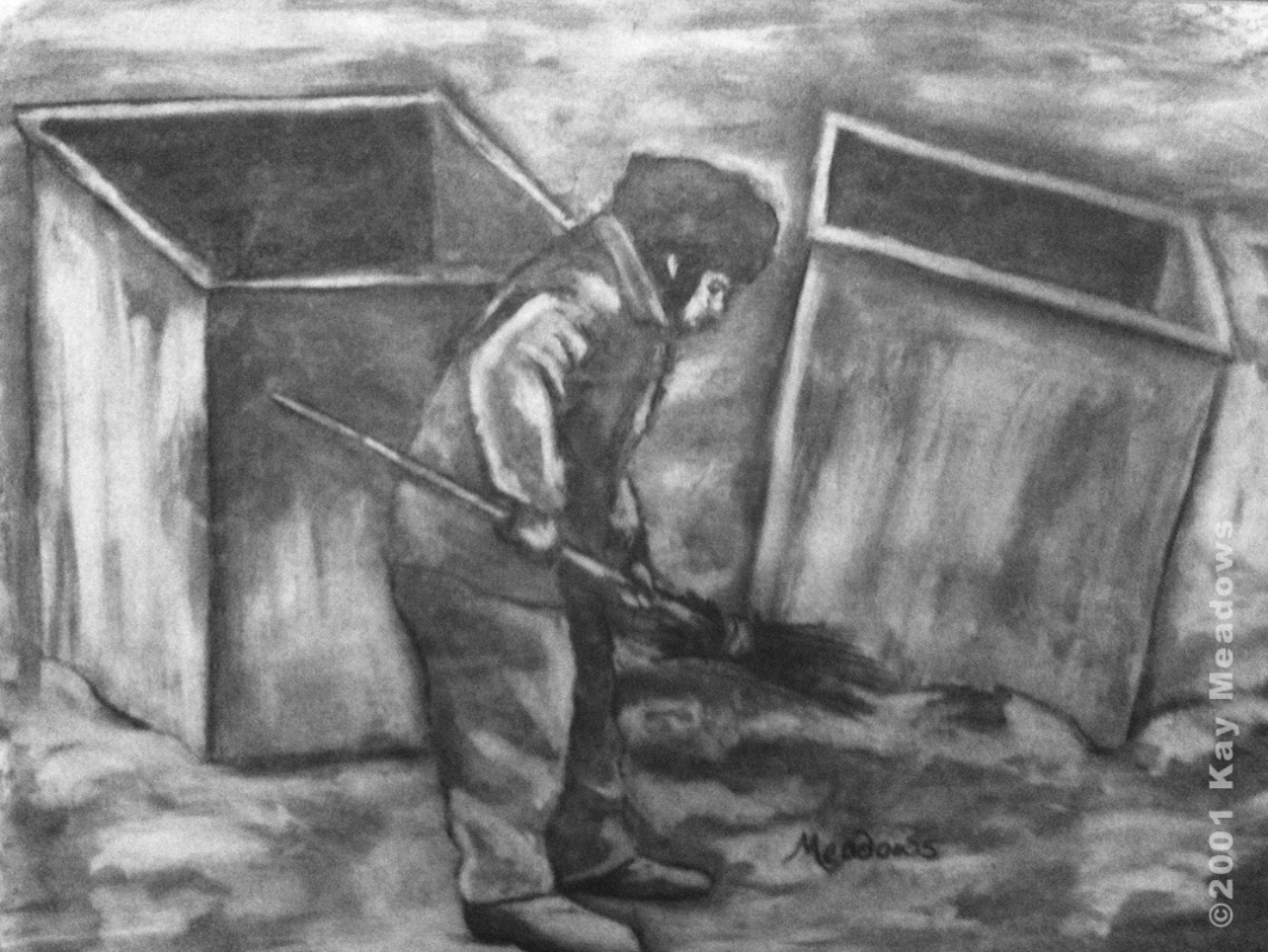
In Russia, I remember a man bundled in a heavy coat and a large fur hat, sweeping the ground around two oversized dumpsters. There was something about the way he moved—steady, quiet, almost invisible in his task. Nothing dramatic, nothing staged. Just a moment that settled in my mind and stayed.
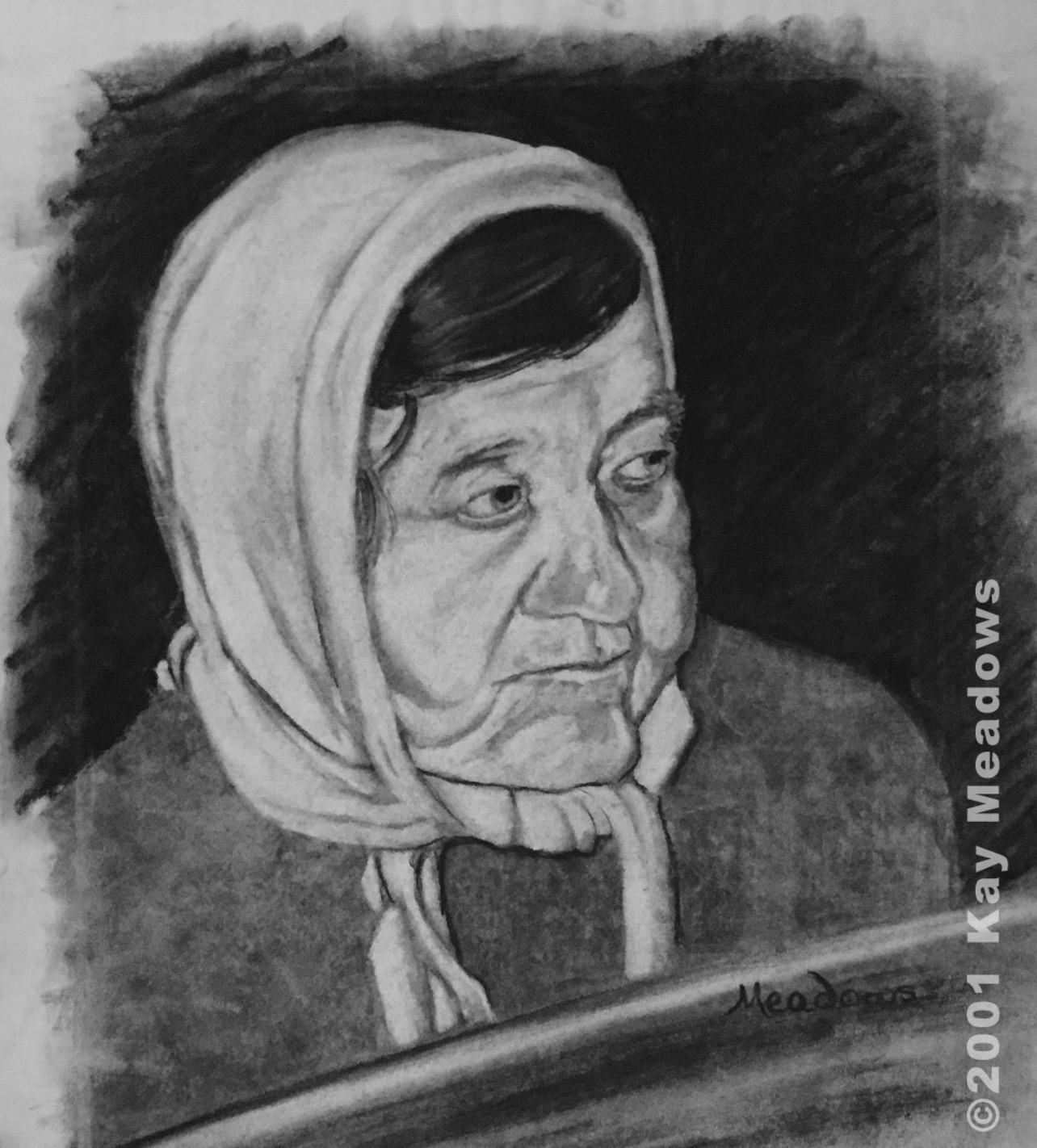
Another day, inside a church, I saw a woman—a babushka—sitting alone in a pew. Wrapped in layers, still and self-contained. The light around her was soft, and the space felt heavy with history. She didn’t move much, but she didn’t need to. Her presence filled the space.
Later, in Krakow, Poland, the energy shifted.
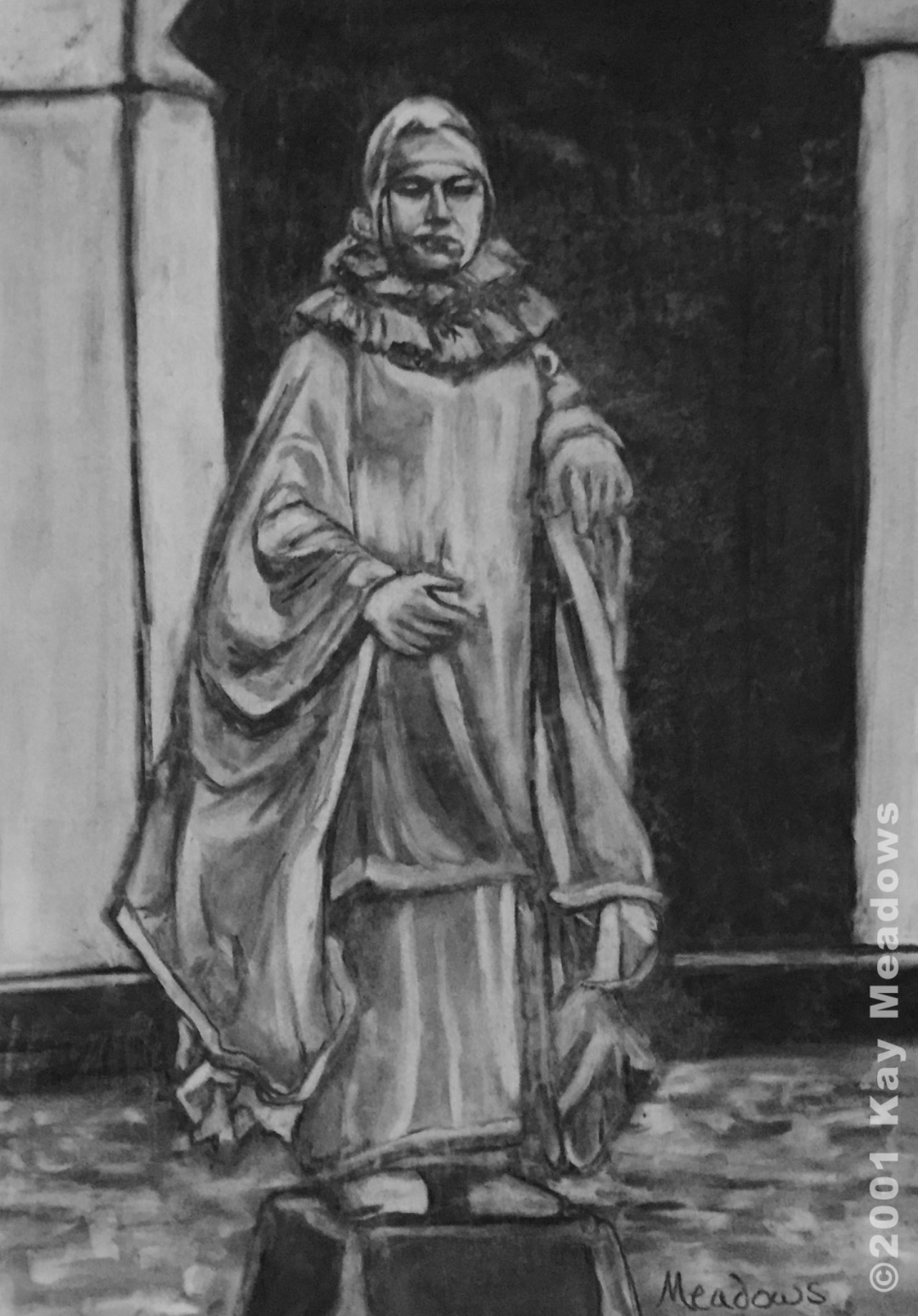
In Krakow, Poland the streets were alive with performers—people who had made themselves into something to be seen. One woman stood completely still on a small box, dressed in a long white gown, her entire body painted white. At first, she seemed like a statue. Then, without warning, she would come to life—startling those who passed by. It was theatrical, unexpected, and oddly eery.
And then there was the musician.
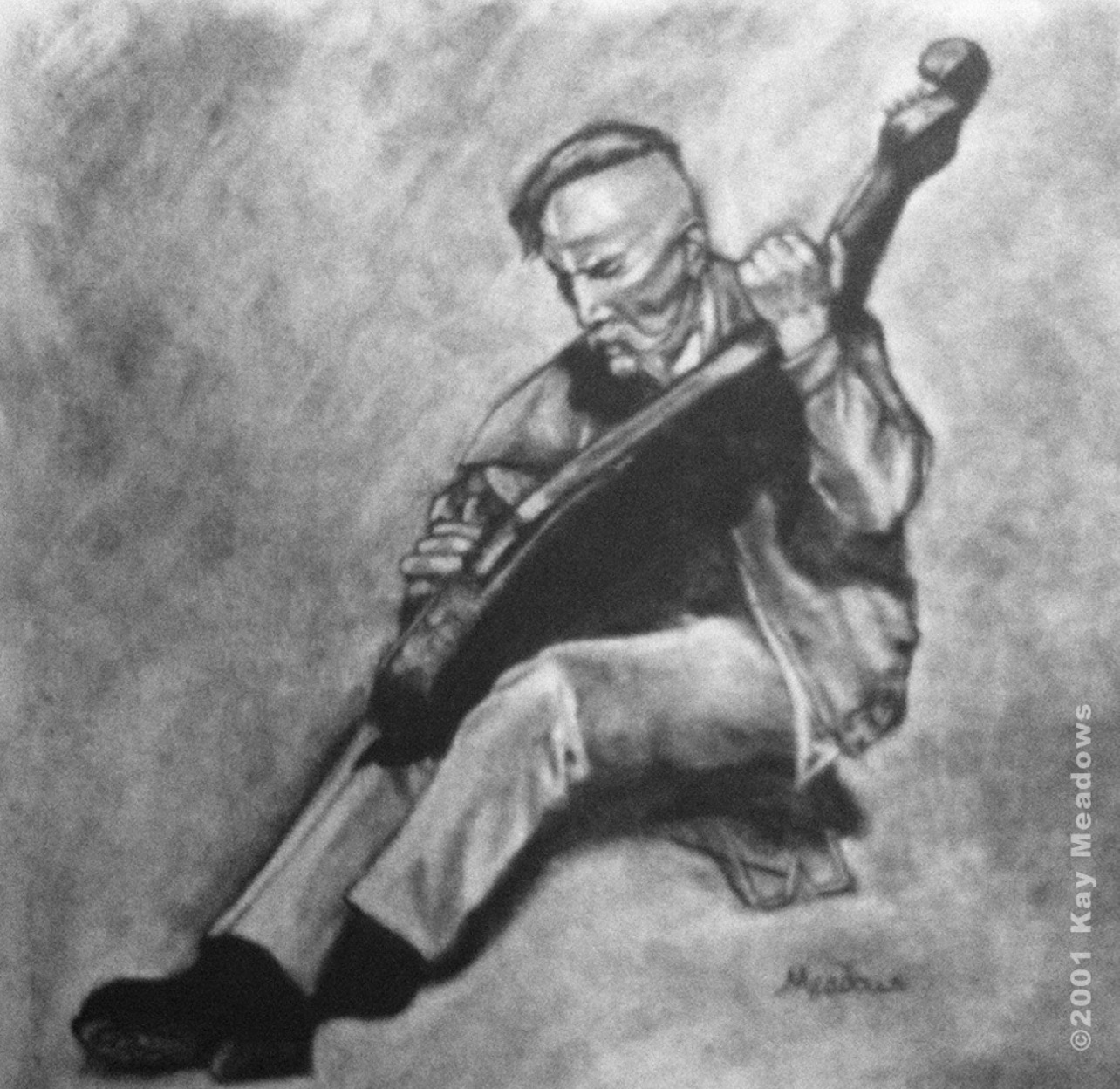
He sat low to the ground on a small stool, playing an instrument I had never seen before—something like a dulcimer mixed with a guitar, but far more intricate. His posture was folded into the music. His hair was cut in a way that caught my attention—a kind of mohawk, but softened, laying over instead of standing upright. There was a rhythm not just in the sound, but in the way he held himself.
I didn’t sketch them there. I carried them home.
These charcoal drawings came later, shaped by memory rather than immediacy. And I think that matters. Memory has a way of distilling what was important. It removes what isn’t needed and holds onto what lingered.
When I look at these pieces now, I don’t just see the people—I see what drew me to them.
Stillness.
Presence.
Gesture.
A kind of quiet humanity that doesn’t ask to be noticed, but stays with you anyway.
Travel gave me the moments.
Time gave me the understanding of why they mattered.
And the drawings… are what remained.